At CES 2026, Yanhe Technology unveiled its latest passive perovskite solar solutions, demonstrating how AI hardware can operate without conventional batteries or frequent charging.

Powered by ambient light, Yanhe’s perovskite technology enables a wide range of AI and IoT devices — including smart locks, security cameras, video doorbells, smart glasses, keyboards, remote controls, E-ink displays, sensors, and GPS trackers — to achieve self-sustained, battery-free operation. The showcase highlighted a new energy paradigm for low-power intelligent devices.

During the exhibition, Yanhe presented its full portfolio of rigid and flexible perovskite solar cells, all independently developed and certified under international standards including RoHS, REACH, and IEC 63163:2021. With advantages in efficiency, stability, ultra-thin form factors, and cost control, these products are well suited for consumer electronics, smart home systems, wearables, and other ultra-low-power applications.
A key highlight was Yanhe’s fully automated “lights-out” production line for consumer-grade perovskite solar cells in Changde, China. Operating 24/7, the facility supports large-scale manufacturing and has enabled Yanhe to deliver tens of millions of units to over 100 brands across more than 50 countries and regions, including leading global enterprises.
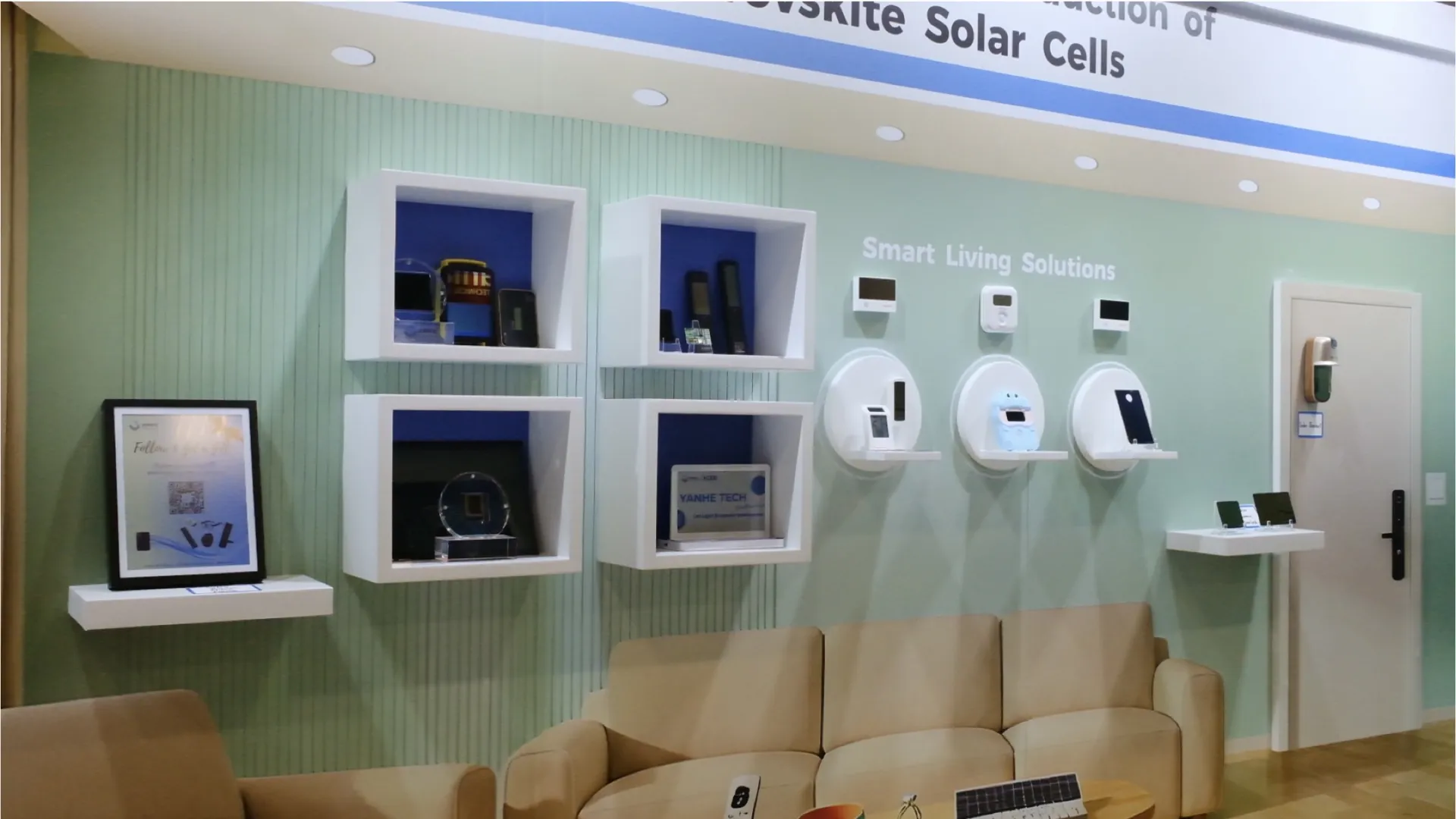
At CES 2026, multiple partner products powered by Yanhe’s perovskite cells made their global debut, validating the maturity and mass-production readiness of the technology. Industry professionals widely recognized Yanhe’s approach for bridging real-world light conditions and power demands, turning prototypes into commercially viable products.

Aligned with CES 2026’s theme, “Innovation in Tune with You,” Yanhe Tech’s solutions reflect the growing convergence of clean energy and intelligent hardware. Looking ahead, the company will continue to advance perovskite innovation through scalable manufacturing and scenario-driven integration, helping shape a battery-free energy paradigm for AI-era devices.