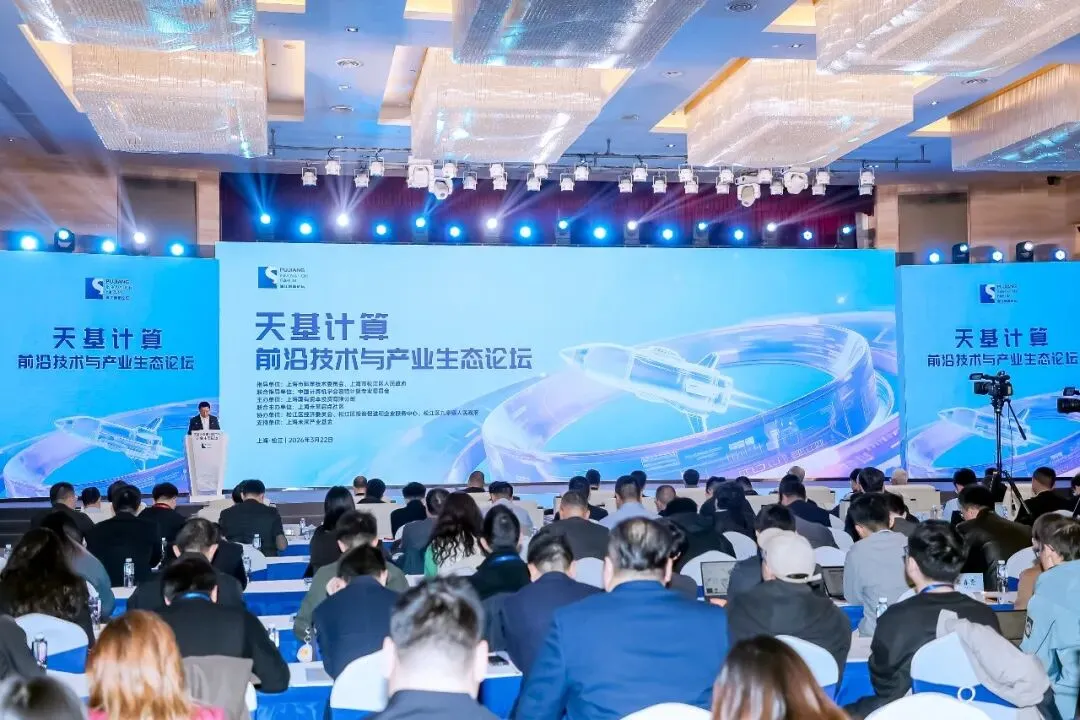
On March 22, the Space-Based Computing Frontier Technology and Industrial Ecosystem Forum, a core session of the Pujiang Innovation Forum, was held in Shanghai. The event brought together key players across space computing and aerospace energy to foster technical exchange and industry collaboration.
Professor Dechun Zou (Peking University) delivered a keynote titled “Space Energy: Opportunities and Challenges of Perovskites.” He highlighted the growing demand for space energy as satellite functions evolve toward computing, with single-satellite power consumption reaching the 10 kW+ level. Against this backdrop, traditional technologies face limitations: crystalline silicon struggles with efficiency and environmental tolerance, while GaAs—despite dominating over 95% of the market—remains constrained by cost, material scarcity, and limited flexibility.
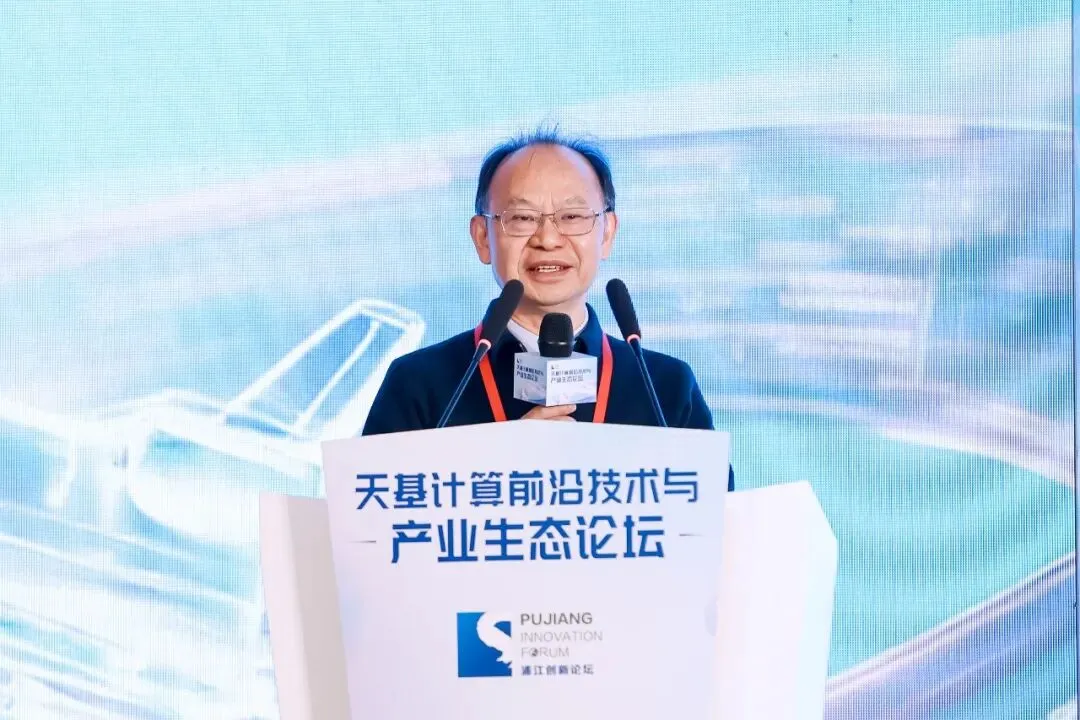
Perovskite photovoltaics offer a promising alternative, combining high efficiency, ultra-lightweight design, flexibility, and strong radiation resistance. With a theoretical efficiency of ~33% for single-junction cells and over 45% for tandem structures, and a power-to-weight ratio of 10–30 W/g, perovskite solutions can significantly reduce satellite mass and launch costs. Meanwhile, abundant materials and favorable space conditions further enhance their application potential.
Yanhe Technology’s latest progress in this field was also highlighted. Its tandem perovskite modules have successfully passed extreme environment simulations conducted by leading aerospace institutions and commercial satellite companies, meeting key aerospace standards. The company is now preparing for in-orbit validation, marking a critical step toward real-world deployment.
Professor Zou also noted that challenges remain, including device stability under extreme conditions and the need for more comprehensive validation systems. Industry efforts are ongoing in areas such as all-inorganic materials, flexible thin-film structures, and multi-factor testing systems.
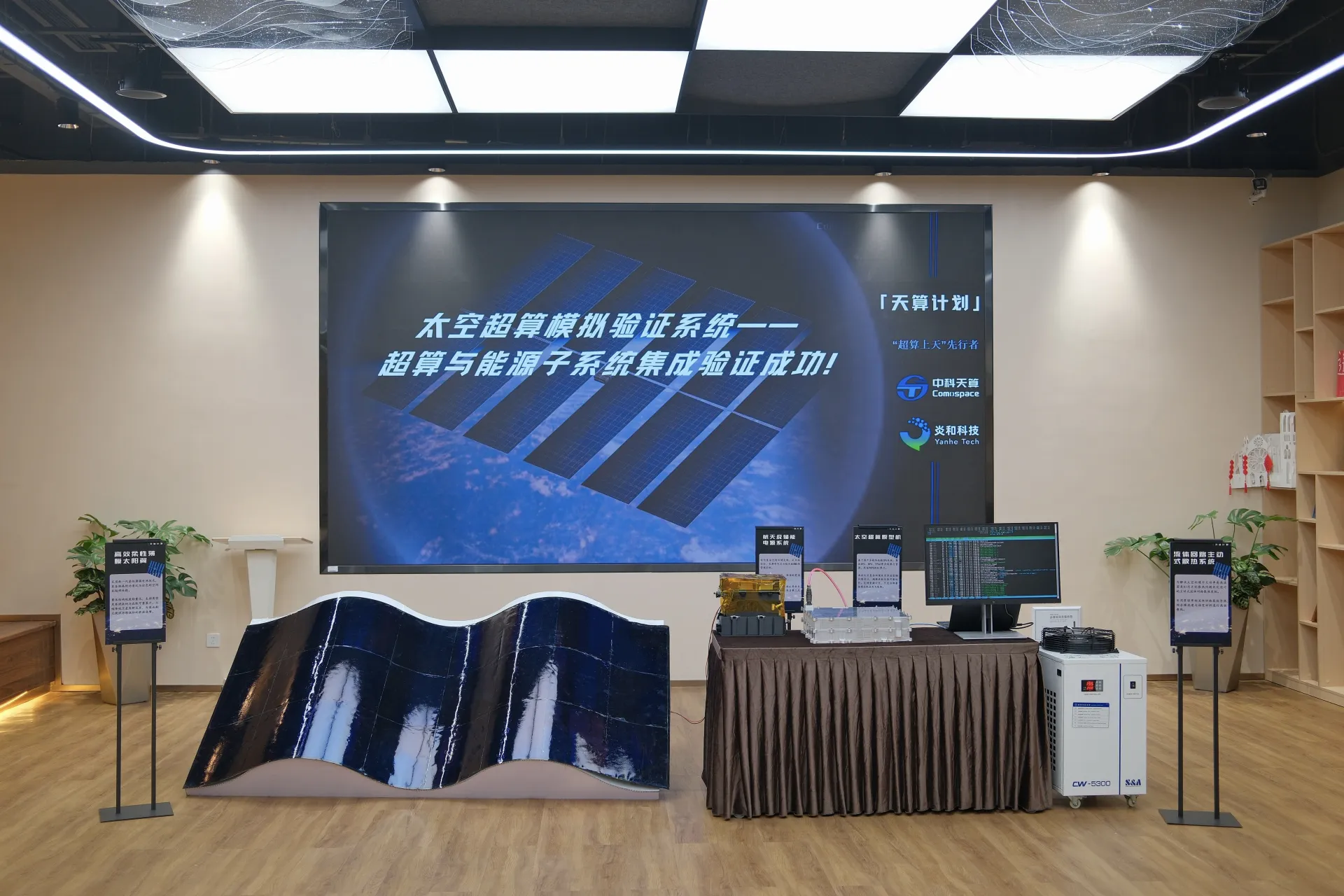
At the forum, updates were also shared on the collaboration between Yanhe Technology and Comospace. The two parties have completed joint development of a space-based computing prototype with 10 POPS-level AI computing power, powered by Yanhe’s “Nebula” flexible thin-film solar arrays (>20% efficiency, ~200 W/kg, 8-year design life). The next step will be the experimental launch of Tiansuan-1, with a long-term vision of building a large-scale space computing network.
With 2026 widely seen as the starting point for the commercialization of space photovoltaics, perovskite technology is expected to play an increasingly important role as satellite deployments scale and new application scenarios emerge.
As a key innovator in perovskite space photovoltaics, Yanhe Technology will continue to advance R&D, accelerate in-orbit validation, and support the development of next-generation space energy systems.